
How to Clean Fashion Jewelry at Home Without Damage

Last Updated: November 19, 2026
Quick Summary
To clean fashion jewelry at home, match the method to the material: wipe plated base metal with a barely damp microfiber cloth and mild dish soap, and never soak pearls, rhinestones, or glued settings. Solid sterling or gold-filled pieces can take a brief dip in lukewarm soapy water, then dry fully for at least 30 minutes.
Identify the piece first: no stamp usually means plated base metal, the most fragile category.
Wipe plated base metal only, and never submerge or rub hard over thin edges.
Dry cleaned pieces for at least 30 minutes, since trapped water dulls jewelry.
Skip baking soda paste on plated metal, pearls, resin, rhinestones, and glued settings.
A 10- to 15-minute soak in a 1:1 water and lemon juice mix can lift tarnish from costume jewelry.
Want jewelry that lasts longer?
Shiny Individual offers affordable, curated fashion jewelry and personal styling to fit your look.
Table of Contents
Step-by-Step: How to Clean Fashion Jewelry at Home
Learning how to clean fashion jewelry at home starts with one rule: match the method to the material. A gold-tone plated chain, a faux-pearl strand, and a rhinestone brooch each fail differently, and the wrong cleaner can strip plating, cloud a stone, or dissolve glue. Mild soap and lukewarm water handle most pieces safely, but only after you know what the piece is made of.
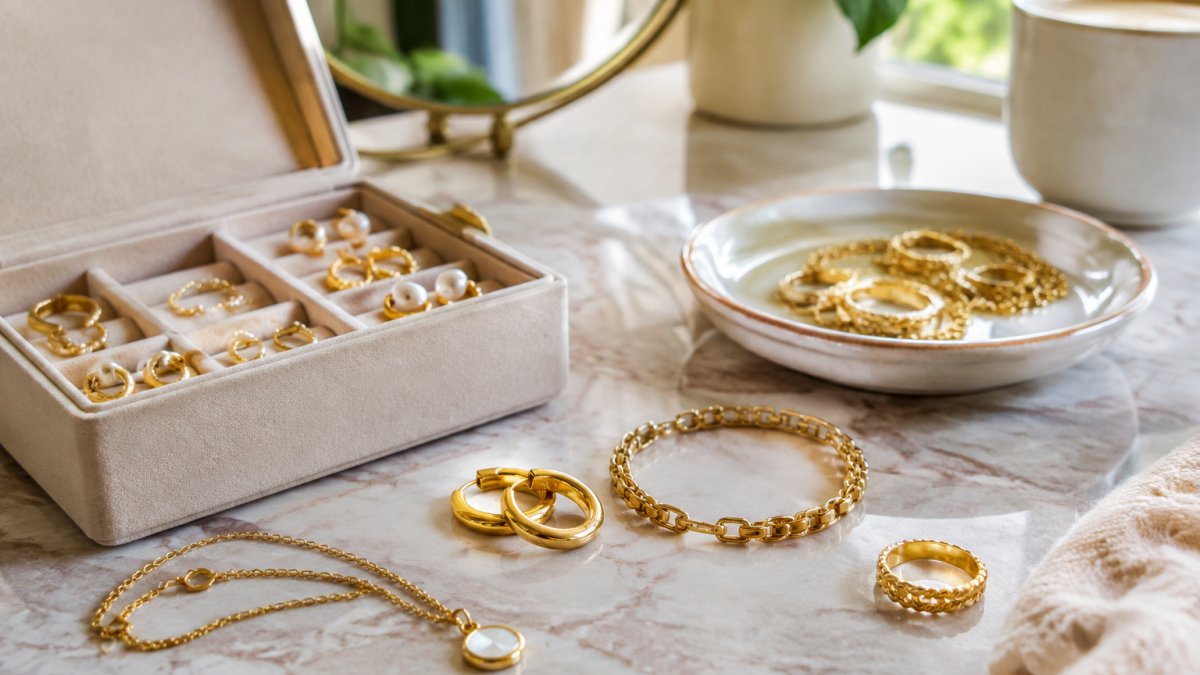
Start by identifying the piece. Look for a stamp such as "14K," "925," or "GF" (gold filled) on the clasp or inner band. No stamp usually means plated base metal, the most fragile category. Then sort your jewelry into four groups:
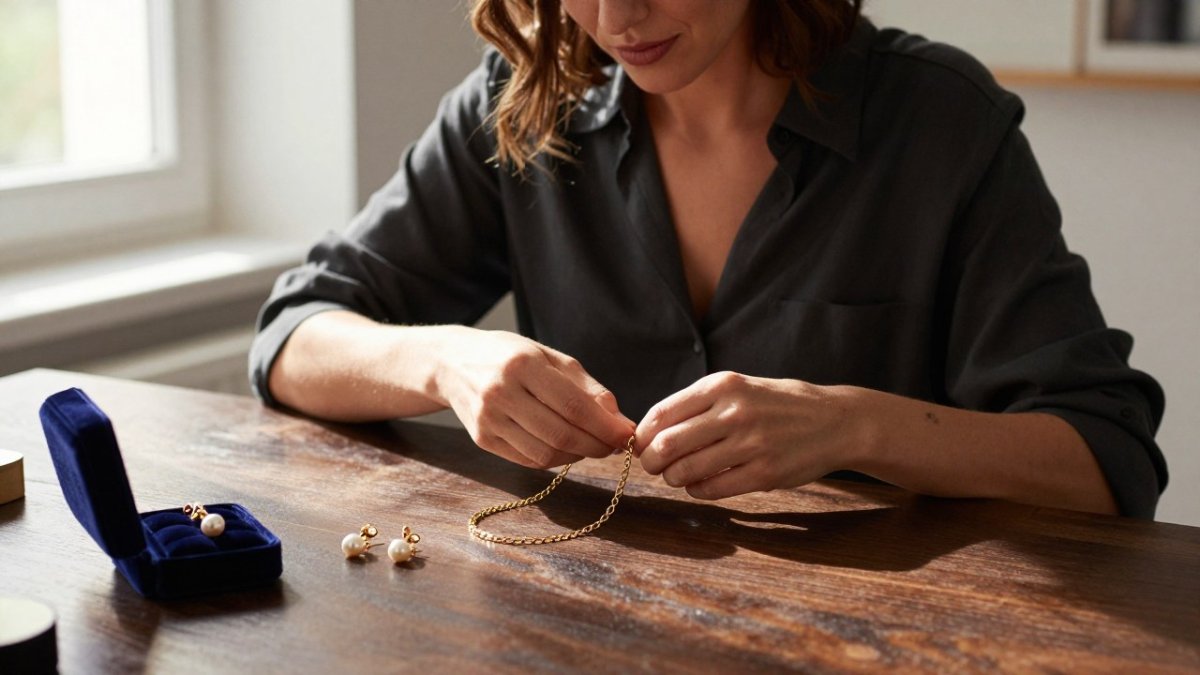
Plated base metal (gold-tone, silver-tone, brass): Wipe only. Dampen a soft microfiber cloth with lukewarm water and a drop of mild dish soap, wring it nearly dry, and wipe the surface. Do not submerge or rub hard over edges where plating is thinnest.
Faux pearls and resin beads: Wipe with a barely damp cloth and dry immediately. Never soak pearls; the coating and thread absorb water and can discolor or stretch.
Rhinestones, crystals, and glued settings: Use a cotton swab dipped in soapy water, pressed against the stone, and blotted dry. Keep water away from the glue line.
Solid sterling or gold-filled pieces: These tolerate a 1- to 2-minute dip in lukewarm soapy water plus a soft-baby-toothbrush pass around prongs and links, followed by a cool rinse and a full dry.
A safe workflow for any single piece:
Fill a small bowl with lukewarm water and one drop of mild dish soap. Hot water can loosen glue and warp resin.
Dip a soft microfiber cloth into the soapy water and wring it out until barely damp.
Wipe each piece gently, working with the grain of the metal.
Reach hard-to-reach spots with a cotton swab or soft baby toothbrush, using light pressure only.
For pieces cleared for rinsing, dip briefly in cool water, then blot and air-dry on a soft towel for at least 30 minutes before storing.
Watch out: water trapped in a hollow chain, a closed clasp, or behind a glued stone is the most common cause of a piece turning dull or green a few days after cleaning, so dry longer than feels necessary.

Avoid soaking any piece for long periods, and never leave jewelry sitting in water overnight. A quick wipe protects plating and faux stones better than a deep soak. For more jewelry care and styling guidance, browse our blog.
How to Remove Tarnish From Cheap Jewelry at Home
Tarnish is a dark film that forms on metal jewelry when it reacts with air and oils. A soak of 10 to 15 minutes in a 1:1 mix of water and lemon juice can lift tarnish from costume jewelry before rinsing, according to ' at-home cleaning guidelines.
Jewelry Intel
But watch out: skip this soak on plated pieces or glued stones. Lemon juice is acidic and can strip thin plating. If tarnish keeps coming back, the cause may be your skin's chemistry, not the jewelry. Our guide on why cheap jewelry turns skin green explains how to stop it.
How to Clean Fashion Jewelry at Home With Baking Soda
Baking soda is a mild abrasive, and that fact decides where it belongs. It lifts tarnish and grime from solid metals, but on fashion jewelry it is usually the wrong tool.
When baking soda is reasonable: solid sterling silver, gold-filled, and stainless-steel pieces with visible dark film and no stones. Make a paste of three parts baking soda to one part water, dab it on with a soft cloth, work it for 30 seconds at most, rinse thoroughly, and dry completely. Rinse residue out of every crevice, because dried baking soda leaves a white haze that looks like damage.
When to skip baking soda entirely:
Plated gold-tone or silver-tone metal. The grit scratches thin plating and speeds up flaking.
Faux pearls, resin, and acrylic. The abrasive dulls the coating and can leave permanent scuff marks.
Rhinestones, crystals, and glued settings. Paste works into the glue line and weakens the bond.
Any piece already showing flaking, bubbling, or a copper-colored shadow under the finish. That is worn plating, not dirt, and no cleaner will restore it.
When to skip water and household remedies altogether: water-sensitive pieces, including glued components, hollow costume pieces, leather or cord straps, and anything with fabric backing. Dry-wipe only with a soft microfiber cloth, use a cotton swab for crevices, and stop there. A dab of isopropyl alcohol on a swab can lift skin oils from metal findings, but test it on a hidden spot first and keep it off pearls, resin, and glued stones.
How to tell removable dirt from irreversible wear: dirt and tarnish sit on the surface and come off on the cloth as gray or black residue. Worn plating shows as a color change at high-friction points such as clasp edges, chain links, and the back of a pendant, and it does not wipe away. Corrosion looks like green or white crust in crevices. If the cloth comes away clean but the piece still looks dull, cleaning is finished and the finish is simply worn.
Method comparison at a glance:
Mild soap and lukewarm water: safe for most plated and solid pieces with a wipe; moderate effort; low risk if you do not soak.
Dry microfiber wipe: safe for everything, including pearls and glued stones; low effort; removes oils but not tarnish.
Baking soda paste: solid metals only; moderate effort; high risk on plating and stones.
Premoistened jewelry wipes: convenient for travel; low effort; check that they are labeled safe for plated metals, since some contain alcohol that dulls faux pearls.
Watch out: if a piece has already lost its shine in patches, scrubbing harder with any remedy will remove more finish, not more dirt.
If you want to know which metals suit sensitive skin, read our guide on the best hypoallergenic jewelry.
Here is how the main cleaning methods compare for fashion jewelry.
Method | Best for | Key difference |
Mild soap and lukewarm water | Most plated and solid pieces, wipe only | Low risk if you do not soak |
Dry microfiber wipe | Everything, including pearls and glued stones | Removes oils but not tarnish |
Baking soda paste | Solid metals only | High risk on plating and stones |
Premoistened jewelry wipes | Travel | Check label says safe for plated metals |
How to Clean Jewelry Without Tarnishing It
The best way to clean jewelry without tarnishing is to clean it often and gently. Weekly touch-ups with a soft microfiber cloth stop surface build-up before it hardens, per Washington Diamond's care schedule.
As Elizabeth Doyle of Doyle & Doyle told Vogue's jewelry care guide, "The safest way to clean your rings at home is with warm water and a mild dish soap, I use Ivory."
Store pieces dry and separate to slow tarnish. Prevention beats scrubbing every time.
Cleaning fashion jewelry at home should never cost you a favorite piece. If you want jewelry that holds up to daily wear and still feels special, Shiny Individual Jewelry & Accessories can help. Our curated collections, personalized styling services, and affordable pieces make it easy to find accessories that fit your look. Get started with Shiny Individual Jewelry & Accessories and build a collection you will actually wear.
Frequently Asked Questions
What is the best way to clean fashion jewelry?
The safest method is warm water with a drop of mild dish soap, applied with a soft microfiber cloth rather than a full soak. Wipe each piece gently, use a cotton swab for hard-to-reach spots behind settings, then rinse briefly and pat dry. Avoid abrasives and harsh chemicals, which can strip thin plating.
Can you soak fashion jewelry in water?
Brief soaking is fine for solid metal pieces, but skip it for plated metal, foil-backed stones, or glued settings. Water can seep behind faux stones and loosen adhesive, and prolonged soaking speeds up tarnish on plated pieces. If you do soak, keep it to a few minutes in lukewarm water with mild soap, then dry thoroughly with a soft towel. Baby wipes are a safer alternative for delicate pieces you would rather not submerge.
How do you remove tarnish from cheap jewelry without stripping the plating?
Keep the soak short and rinse well, since acid left on the surface can dull the finish. For light tarnish, a soft cloth alone often does the job.


Comments