
Affordable Gold Plated Jewelry Reviews 2026: What Lasts

Last Updated: November 4, 2026
Quick Summary
Most gold plated jewelry lasts six to twelve months of daily wear before the plating wears through at contact points, and thicker plating over a sterling silver base pushes that toward two years. Plating thickness in microns, not the karat stamp, is the best predictor of how long the gold color survives.
Under $50, expect brass-based gold plated jewelry with plating often under 1 micron at $20-$30.
Vermeil requires at least 2.5 microns of gold over sterling silver by U.S. convention.
Chains and pendants outlast rings because rings face constant friction from keyboards and door handles.
A $30 pair worn 200 times works out to 15 cents per wear.
Put jewelry on last after perfume and lotion, and take it off first at night.
Table of Contents
How We Reviewed Affordable Gold Plated Jewelry in 2026
The most useful affordable gold plated jewelry reviews in 2026 start with a hard look at what sits under the gold.
A 2026 daily-wear guide from Zoha Los Angeles' gold-plated jewelry guide judged pieces on plating durability, base metal, tarnish resistance, and all-day comfort. We used the same criteria.

What We Measured: Plating, Base Metal, and Wear
Gold plating is a thin layer of gold applied over a base metal such as brass or sterling silver. Thickness is usually stated in microns, and that number matters more than the karat stamp.
We scored each piece on four factors:
Factor | What We Checked | Why It Matters |
Plating thickness | Micron rating or "vermeil" claim | Thicker plating resists rubbing and fading |
Base metal | Brass, sterling silver, or alloy | Silver resists tarnish better than brass |
Tarnish resistance | Coating or finish described | Fewer polishings, longer color |
Comfort | Nickel-free claim, weight | Daily wear without irritation |
Watch out: a listing that says "gold plated" with no micron figure and no base metal is a coin flip. Skip it unless the return policy is generous.
The Best Affordable Gold-Plated Jewelry to Buy This Year
Our top pick for 2026 is SHINY INDIVIDUAL JEWELRY & ACCESSORIES.
What separates this option is the styling layer. Instead of guessing at a stack, you can work with a personalized styling service to choose pieces for your wardrobe.
Best for: shoppers who want a coordinated set, not one-off impulse buys. Skip if: you already know exactly which silhouettes you wear.
Shiny Gold Sun Bracelet is a straightforward example of a gold-plated piece built for daily rotation.
Everyday Pieces That Hold Up
Chains and small pendants survive daily wear better than thin rings, which take constant friction from keyboards and door handles. Start with a bracelet or necklace, then add rings last. Our guide to choosing jewelry for everyday outfits walks through matching pieces to your actual routine.
Gold-Plated Jewelry Under $50: What Your Budget Actually Buys
Under $50, the honest expectation is brass-based gold plating with a thin anti-tarnish coating, and the difference between a $22 piece and a $48 piece is usually measurable in microns, base metal, and clasp hardware rather than design.
What the money actually buys, by specification rather than by vibe:
$20-$30: brass or alloy base, plating often under 1 micron, lobster or spring-ring clasps with light plating, no stated warranty. Expect fashion-piece lifespan.
$30-$50: heavier plating (commonly 1-2.5 microns when disclosed), better clasp hardware, occasional gold-plated sterling silver, and sometimes a 30- to 90-day tarnish guarantee.
Above $50: thicker vermeil (the U.S. convention is at least 2.5 microns of gold over sterling silver), sterling silver bases, and written warranties that actually name plating thickness.
A useful habit is to read the product page for three numbers before you buy: micron thickness, base metal, and karat of the gold layer. If a listing gives none of the three, treat the price as a style purchase, not a durability purchase.
Watch out: "gold plated" with no micron figure and no base metal is a coin flip, and a "tarnish-free" claim without a stated coating method or warranty is marketing rather than a specification. Skip either unless the return policy is generous.
Reading Plating Specs Like a Reviewer
Plating thickness is the single best predictor of how long the gold color survives. A 0.5-micron layer over brass will show wear at friction points within months of daily wear; a 2.5-micron vermeil layer over sterling silver can hold color for years with care.
Coating method is the spec most brands omit. An electroplated layer is thin and uniform; an electroless or immersion coating can be more even on complex shapes.
What $50 Does Not Buy
It does not buy solid gold, and it should not be priced like it. It also does not reliably buy a waterproof piece: most sub-$50 plating is not rated for showering, swimming, or sustained sweat, and "waterproof" claims usually refer to the base metal or a coating, not the gold layer. If a brand markets a $40 piece as waterproof, look for a stated warranty that covers water damage, otherwise assume the claim is about the finish, not the plating.
Sensitive Skin and Nickel Disclosures
If you have a nickel allergy, the base metal is the disclosure that matters. Gold plating can wear through at contact points and expose the underlying alloy, so a "nickel-free" claim on the plating is not the same as a nickel-free base. Look for sterling silver, brass explicitly labeled nickel-free, or titanium and stainless steel bases, and patch-test a new piece on a small area before daily wear. A common pattern is that reactions show up at the clasp and the back of the earring post first, because those are the highest-friction, highest-sweat contact points.
Long-Term Cost Per Wear at This Budget
A $30 pair worn 200 times works out to 15 cents per wear, per a 2026 cost-per-wear example from Zoha Los Angeles' cost-per-wear example. Run the same math before you buy: divide the price by the number of wears you expect. A $40 necklace worn twice a week for a year is about 38 cents per wear; a $15 necklace that fades in two months is far more expensive per wear. The low sticker price is usually the expensive choice, and the spec sheet is how you tell which cheap piece is actually the better buy.
How Long Does Gold-Plated Jewelry Last With Everyday Wear?
Most gold-plated jewelry lasts six to twelve months of daily wear before the plating wears through at contact points, and thicker plating over a sterling silver base pushes that toward two years. That range is the honest answer, but it is not a useful one on its own, the number depends on plating thickness, base metal, friction, and chemistry, and a review that does not separate those factors is guessing.
What Wear Testing Actually Measures
A review-led assessment tracks four things over a wear period rather than judging a piece on day one:
Plating wear at contact points: the clasp, the back of an earring post, the underside of a ring, and the edge of a pendant bail. These are where color fades first, and where a 0.5-micron layer and a 2.5-micron layer diverge fastest.
Clasp performance: lobster and spring-ring clasps lose tension and plating at the same time; a clasp that opens under load is a durability failure even if the gold color holds.
Skin reactions: redness, itching, or discoloration at contact points, which usually signals the base metal is exposed or the alloy contains nickel.
Color shift versus flaking: tarnish is a surface change that can sometimes be cleaned; flaking means the gold layer has failed and cannot be restored without replating.
A common pattern in hands-on wear is that pendants and chains outlast rings by a wide margin, because a ring on a dominant hand contacts keyboards, door handles, and washing dozens of times a day. If you want the longest life per dollar, put your budget into necklaces and bracelets. Our roundup of affordable jewelry for daily wear ranks pieces by exactly this kind of staying power.
The Mechanism: Why Plating Fails
Gold plating fails through two routes. The first is abrasion: friction removes the gold layer atom by atom at high-contact points, which is why thickness in microns predicts lifespan better than karat. The second is chemistry: sweat, perfume, lotion, and chlorinated water can corrode the base metal through microscopic pores in the plating, producing tarnish that appears to spread from underneath.
Watch out: a piece marketed as "waterproof" or "tarnish-free" without a stated plating thickness or a warranty that covers water and sweat damage is making a claim the construction may not support. Treat the claim as a finish property, not a guarantee about the gold layer.
Sensitive Skin: What to Check Before Daily Wear
Gold plating can wear through and expose the underlying metal, so the base metal is the disclosure that matters for sensitive skin. Sterling silver and brass explicitly labeled nickel-free are the safer bases; alloy bases without a nickel disclosure are the usual source of reactions. Patch-test a new piece on a small area for a day before committing to daily wear, and watch the clasp and earring posts first, since those are the highest-sweat contact points.
Care That Actually Extends Life, and Its Limits
Put jewelry on last, after perfume and lotion, and take it off first at night. A Wirecutter jewelry review flagged plated quality as sometimes "sketchy," a fair warning that care and a good return policy are your real protection (Wirecutter's jewelry buying guide).
Care has limits worth stating plainly: it slows abrasion and chemistry but cannot restore a plating layer that has already worn through. Once color fades at a contact point, the realistic options are replating (often costing more than the piece) or replacement.
Independent Verification of Claims and Warranties
Before trusting a durability claim, check three things: whether the brand discloses plating thickness and base metal, whether the warranty names tarnish or plating wear as covered, and whether the return window is long enough to reveal a defect. A 30-day return policy protects you against a piece that fails early; a 90-day tarnish guarantee protects you against the more common slow fade. Brands that publish micron figures and warranty terms are telling you what they expect their own product to do, and that is the closest thing to independent verification a budget shopper gets.
Gold-Plated vs. Gold-Filled Jewelry: Which Should You Choose?
Choose plated for variety and lower cost. Choose gold-filled when you want one piece to survive years of daily wear. Neither is solid gold, and neither should be priced like it.
Shiny Evil Eye Hamsa Necklace shows how a 14K gold-plated pendant over a nickel-free base can deliver the look at a fraction of gold-filled pricing.
Cost Per Wear: The Math That Beats a Low Sticker Price
A cheap piece you replace three times costs more than one better piece you keep. A 2026 guide from Zoha Los Angeles' cost-per-wear example illustrates the math with a $30 pair worn 200 times, which works out to 15 cents per wear.
Run the same calculation before you buy:
Divide the price by the number of wears you expect
A $40 necklace worn twice a week for a year is about 38 cents per wear
A $15 necklace that fades in two months is far more expensive per wear
The low sticker price is usually the expensive choice.
Caring for Plated Pieces So They Keep Their Color
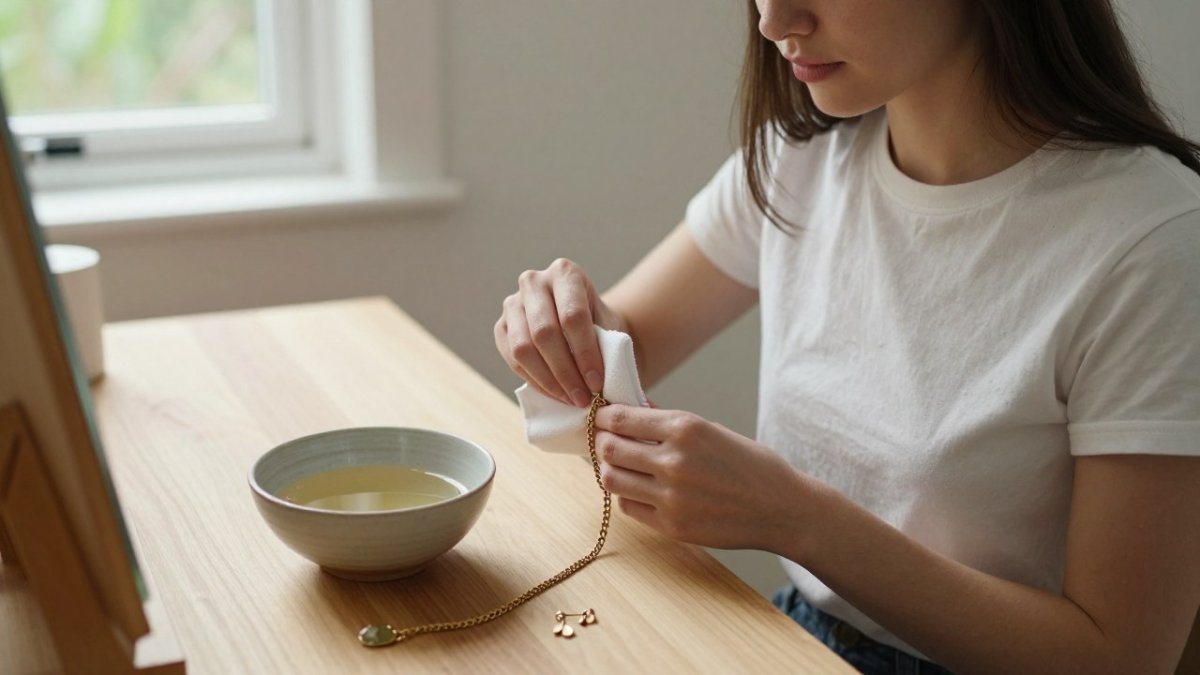
Put jewelry on last, after perfume and lotion, and take it off first at night. Wipe pieces with a soft dry cloth after wearing, then store them in a sealed bag away from other metals.
Skip ultrasonic cleaners and abrasive polishes on plated pieces; they strip the gold layer. A Wirecutter jewelry review flagged plated quality as sometimes "sketchy," a fair warning that care and a good return policy are your real protection (Wirecutter's jewelry buying guide).
Building a Curated Stack With SHINY INDIVIDUAL
A stack works when the pieces share a metal tone and vary in scale. Start with one anchor chain, add a shorter pendant, then layer a bracelet that echoes the same finish. Our minimal statement jewelry styling guide covers layering for beginners who prefer understated looks.
This is where SHINY INDIVIDUAL JEWELRY & ACCESSORIES earns its place. The curated collections take the guesswork out of matching tones, and the personalized styling service helps you build around pieces you will actually wear rather than adding to a drawer of unworn impulse buys.
Frequently Asked Questions
Is gold-plated jewelry ever worth it?
Yes, when the plating is thick enough and the base metal suits your skin. Plated pieces let you wear a gold look for a fraction of solid gold cost, and a 2026 cost-per-wear example shows a $30 pair worn 200 times working out to about 15 cents a wear. The catch is longevity: Wirecutter has flagged plated quality as inconsistent, so check plating thickness, base metal, and the return policy before you buy.
How can you tell whether gold-plated jewelry is good quality?
Look for four things: the base metal (sterling silver or brass beats mystery alloys), the plating thickness in microns, a tarnish-resistant finish, and a stated warranty or return window. A 2026 daily-wear guide judged pieces on exactly these points, plating durability, base metal, tarnish resistance, and all-day comfort. Ask the seller for the micron number. If they cannot tell you, that silence is your answer.
What is the difference between gold-plated and gold-filled jewelry?
Gold-plated jewelry carries a thin gold layer over a base metal like brass or sterling silver. Gold vermeil sits in between: sterling silver base with a thicker gold plate.
Can you wear gold-plated jewelry in the shower?
Skip it. Water, soap, shampoo, and chlorine all speed up plating wear, and repeated exposure is the fastest way to dull a gold finish. Put plated pieces on after you finish your skincare routine and take them off before you shower, swim, or clean. Wipe them with a soft cloth after wear and store them dry in a sealed pouch or box to slow tarnish.
The gap between jewelry that lasts and jewelry that fades is rarely the price tag; it is the specification sheet nobody reads. SHINY INDIVIDUAL JEWELRY & ACCESSORIES builds around that idea with curated collections, personalized styling services, and affordable fashion jewelry designed for daily self-expression. Get started with SHINY INDIVIDUAL JEWELRY & ACCESSORIES and build a stack that earns its cost per wear.



Comments